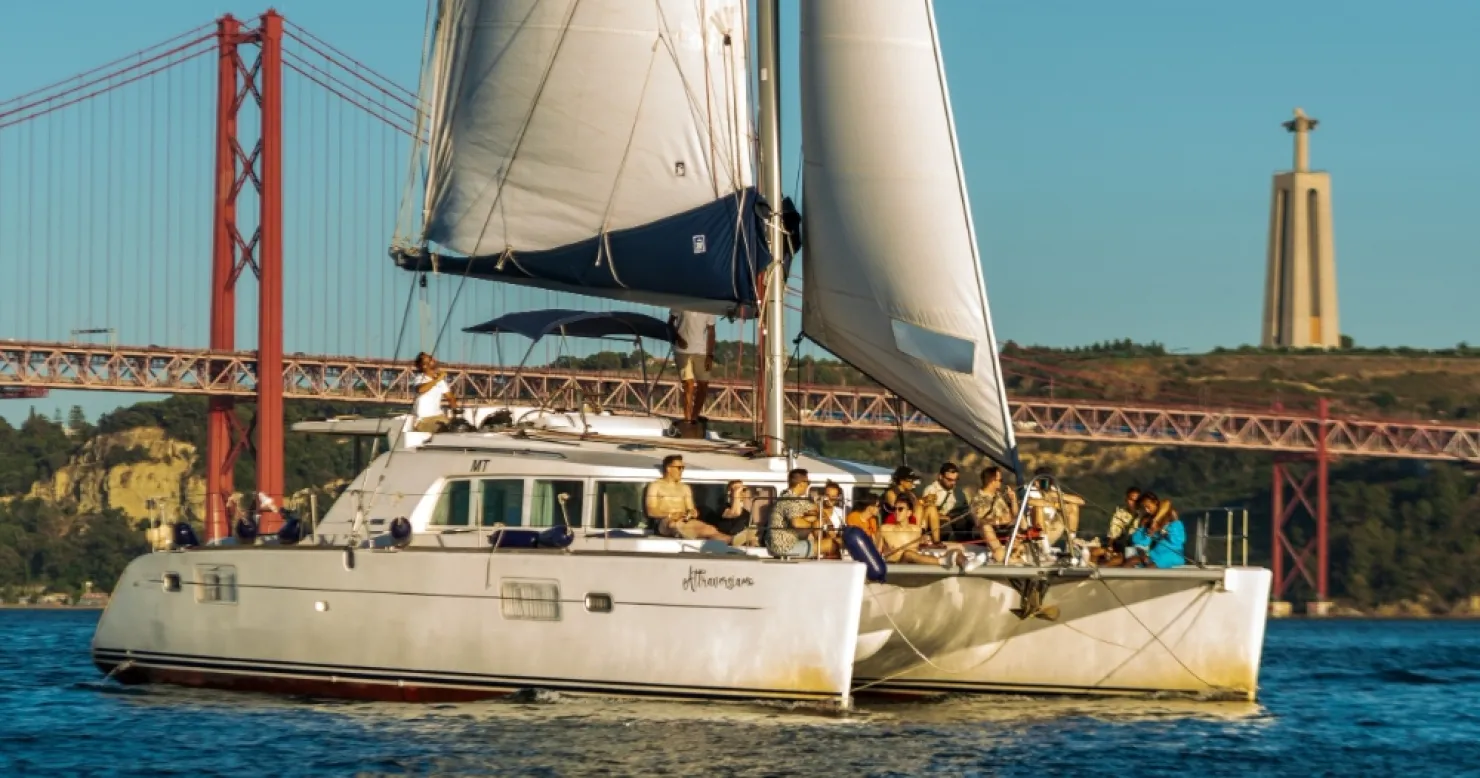
3 hr
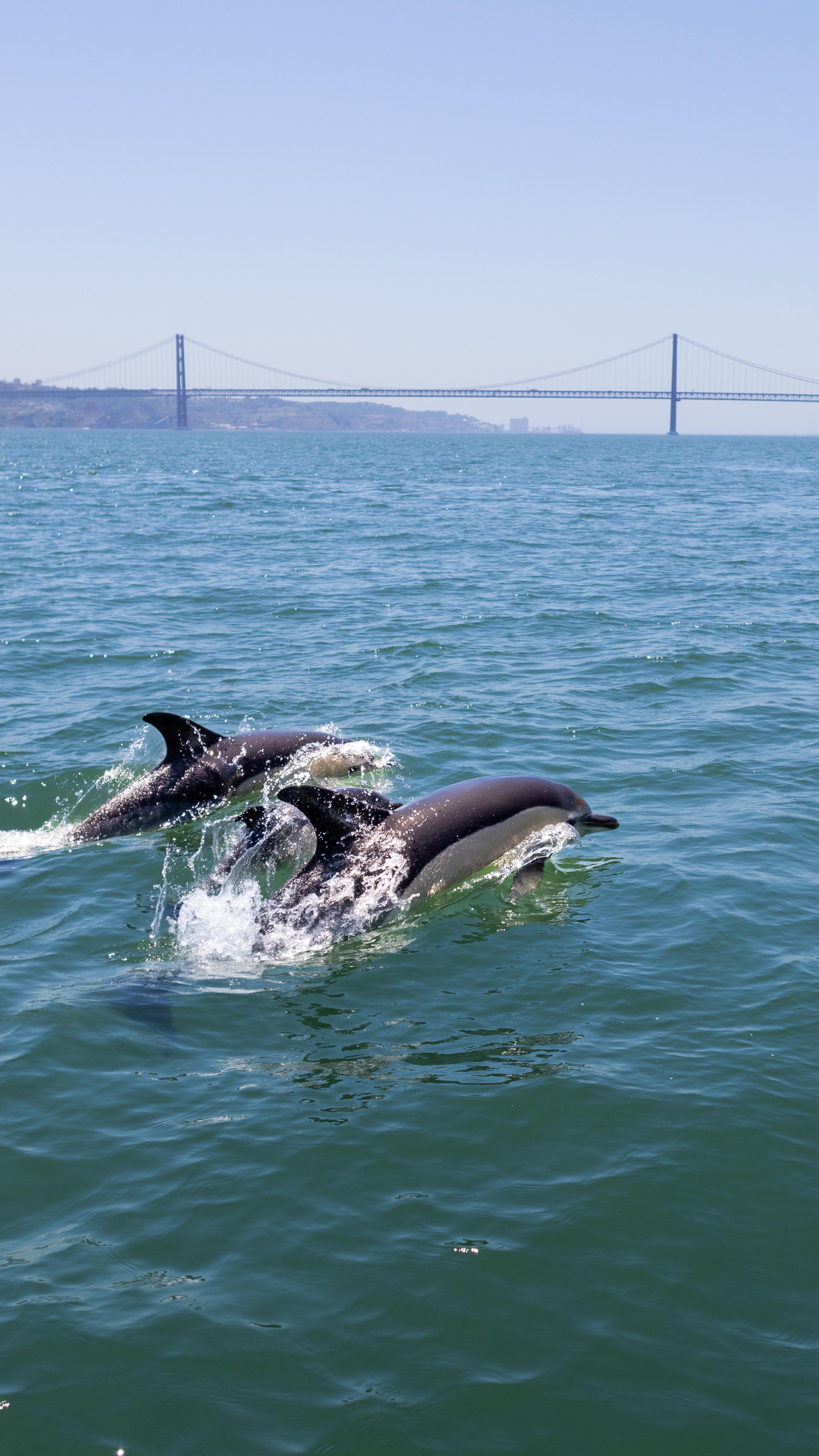
Dolphin Watching Tour with Marine Biologist
- Entry ticket
- Mobile voucher
- Valid same day
- Free cancellation
Lisbon Whale Watching — Atlantic Expeditions & Marine Encounters
Where the Tagus meets open water, cetaceans surface in Portugal's richest coastal corridor
Compare fares, pick the fit — all bookings are mobile-voucher and eligible for free cancellation where shown.
3 hr
3 hr
4 hr
| Experience | Duration | Rating | Small group | Free cancel. | Price | |
|---|---|---|---|---|---|---|
|
Standard Entry
Most popular
Dolphin Watching Tour with Marine Biologist
|
3 hr | ★ 4.9 | ✓ | ✓ | $64 | Book → |
|
Standard Entry
Lisbon Ocean Safari: Dolphin Watching with Marine Biologist
|
3 hr | ★ 4.9 | ✓ | ✓ | $65 | Book → |
|
Standard Entry
Sunset Boat Party on the Tagus River with DJ & Open Bar
|
4 hr | ★ 4.5 | — | ✓ | $24 | Book → |
Worth it for the experience, not guarantees
Lisbon whale watching operates from the Tagus River estuary, not the open Atlantic where cetacean density peaks. At €31 per person, you're paying for a scenic boat expedition through the river mouth toward coastal waters, with dolphin sightings common but whale encounters sporadic and season-dependent. The tour itself delivers — knowledgeable marine biologists, comfortable vessels, and striking views of the coastline and 25 de Abril Bridge. However, the Tagus is a transitional zone; larger whales typically stay farther offshore. If your expectation is guaranteed whale sightings like dedicated ocean expeditions farther north, you'll likely be disappointed. The value proposition works if you treat it as a marine wildlife tour with dolphin focus and possible whale bonuses, set against Lisbon's maritime backdrop. For visitors prioritizing confirmed close encounters over the combined boat trip and city context, dedicated Atlantic charters from Sesimbra or Setúbal offer better odds at higher cost.
Bottom line: Book lisbon whale watching tours if you value the full maritime experience over guaranteed cetacean close-ups — the Tagus delivers atmosphere and dolphins reliably, whales occasionally.
These experiences serve different purposes; most visitors who prioritize wildlife discovery find the specialized lisbon whale watching tours more engaging, while those seeking urban photography prefer the broader river cruises.
|
Top pick Marine Expeditions |
Standard Sightseeing | |
|---|---|---|
| Target Audience | Nature enthusiasts and photographers | Casual tourists and sightseers |
| Duration | 3–4 hours | 1–2 hours |
| Marine Life Focus | Active tracking of cetaceans | None; focus on landmarks |
| Boat Type | Rigid Inflatable Boat (RIB) | Traditional sailing vessel or cruiser |
| Departure Frequency | Limited daily slots | Frequent hourly departures |
| Operational Range | Atlantic Ocean and river mouth | Inner Tagus River |
| See tickets & prices |
Verdict: Select a lisbon whale watching tour to experience the open ocean, or choose a river cruise when purchasing lisbon whale watching tickets if you prefer a relaxed urban perspective of local landmarks.
Hand-picked experiences loved by thousands of travelers
1.5 hours
Free Cancellation
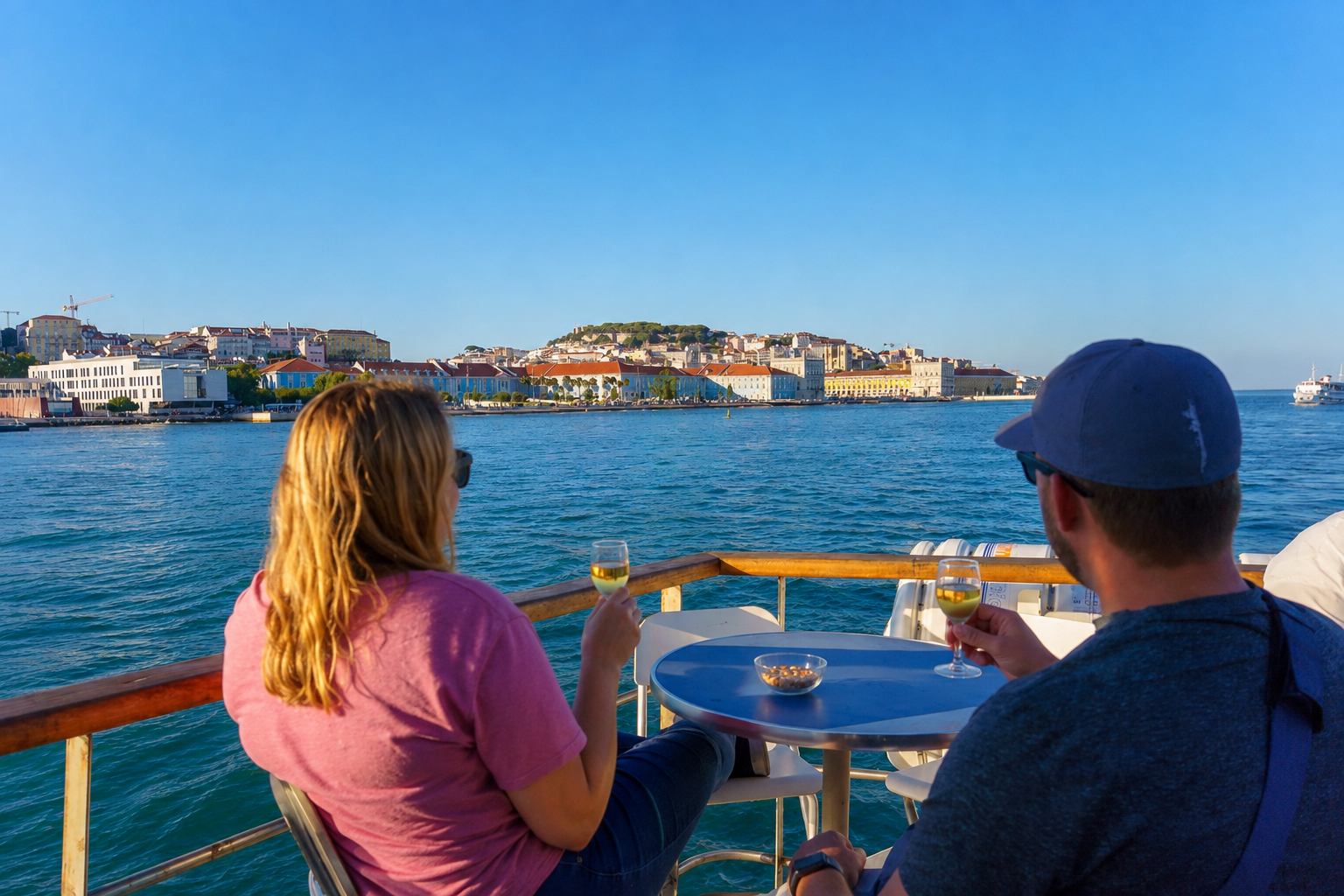
Discover Lisbon's waterfront landmarks during a scenic 1.5-hour river journey with a drink included
1.5 hours
Free Cancellation
Sail past Lisbon's UNESCO sites and monuments while enjoying onboard commentary and river views
2 hours
Free Cancellation
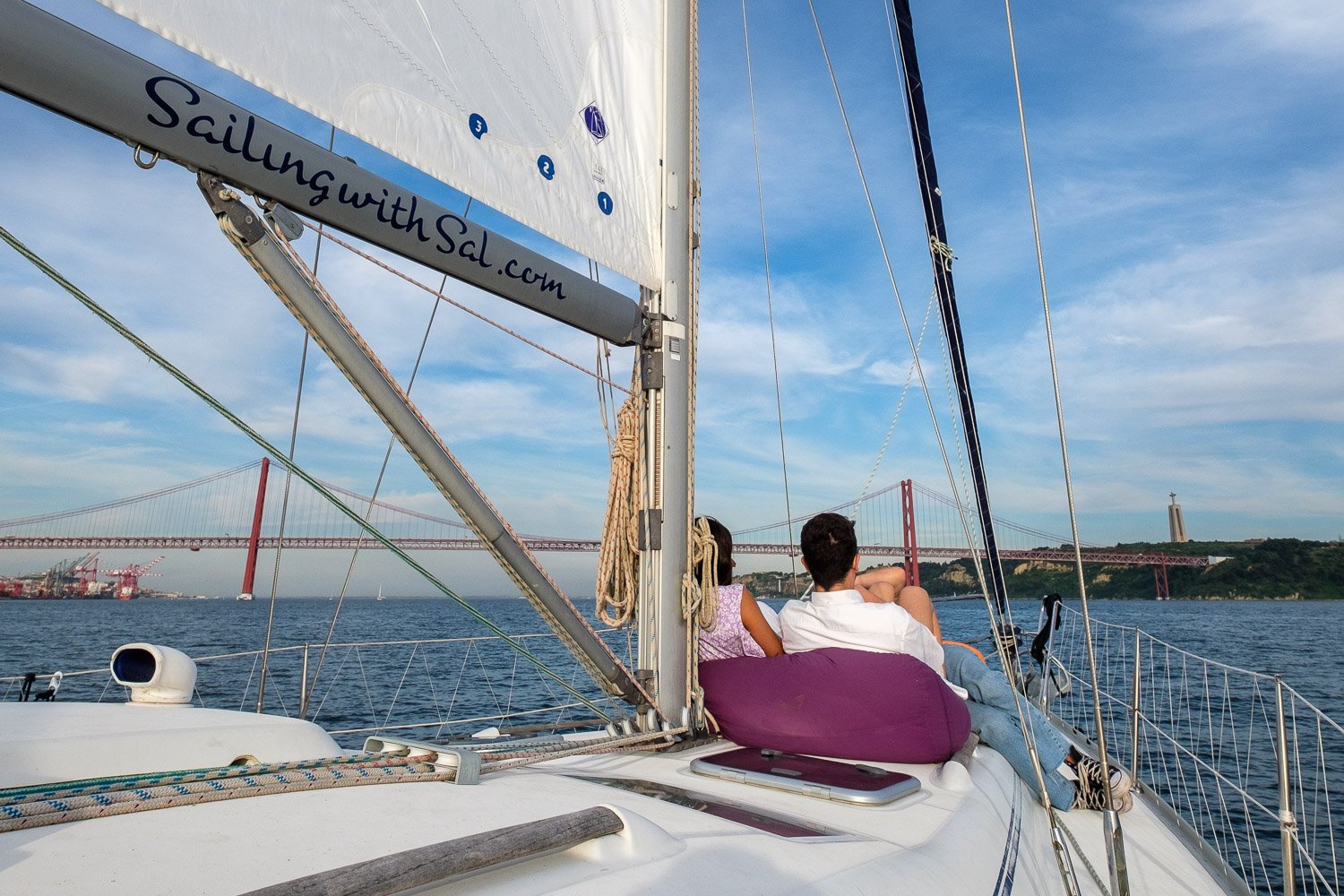
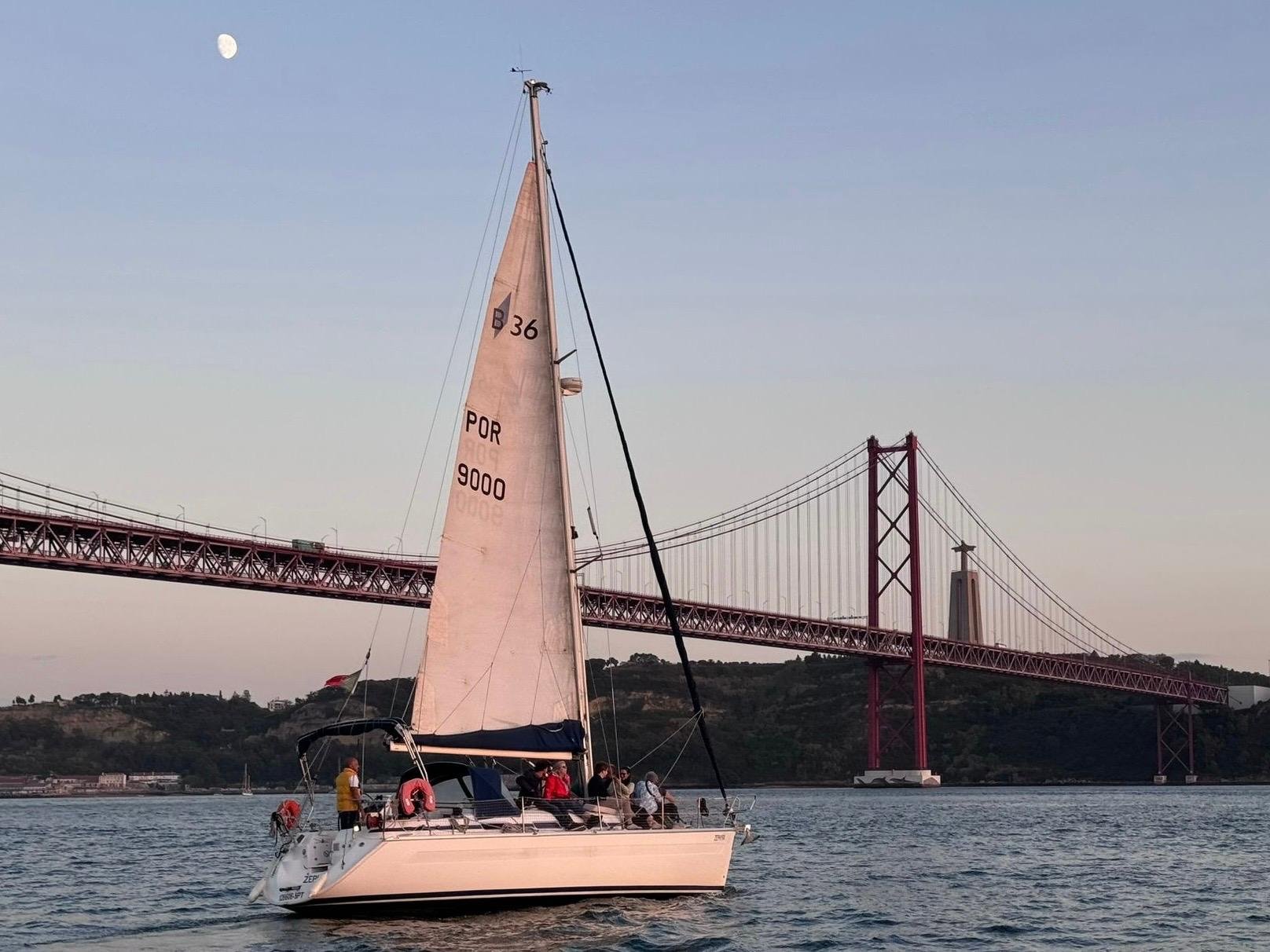
Glide along Lisbon's waterfront aboard a 39-foot sailboat as golden hour paints the city's monuments
2 hours
Free Cancellation
Sail past Lisbon's iconic waterfront landmarks aboard a traditional sailboat with drinks included
2-3 hours
Free Cancellation
Glide along Lisbon's riverfront aboard a luxury sailboat with drinks and snacks included
3 hours
Free Cancellation
Explore western Europe's largest estuary and observe over 200 bird species in their natural habitat
1.5 hours
Free Cancellation
Discover Portugal's capital by road and water aboard a unique amphibious vehicle with expert guides
3 hours
Free Cancellation
Three-hour voyage along the Tagus with traditional cuisine, live Fado singing, and panoramic city views
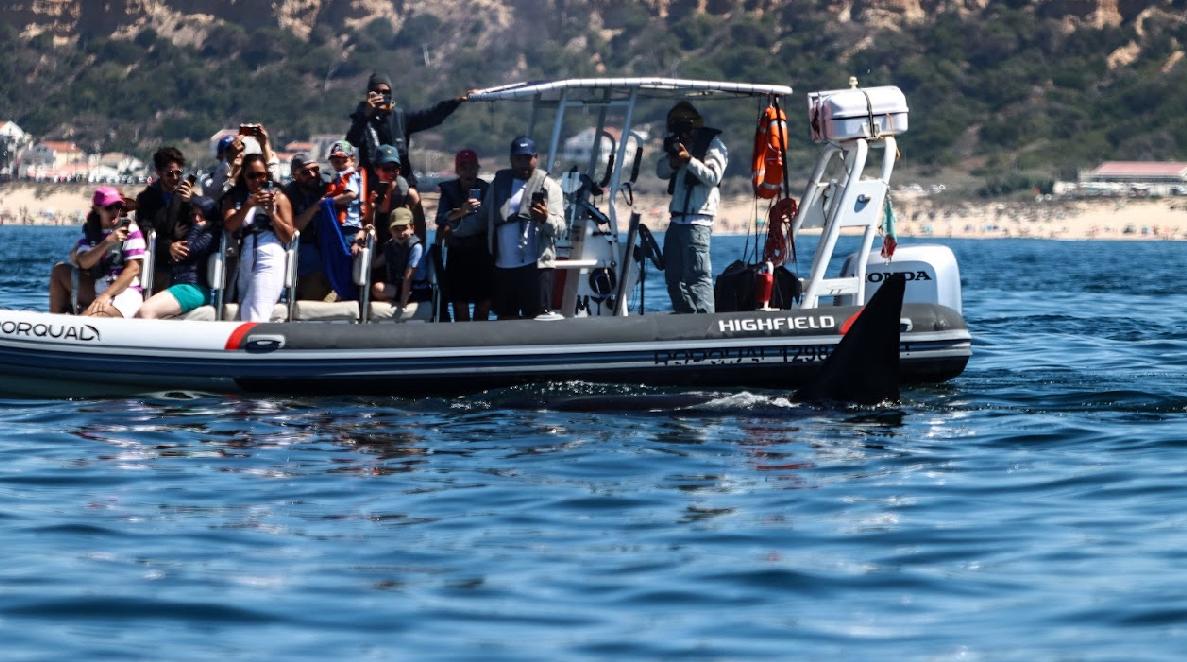
You board at Doca de Santo Amaro ninety minutes before departure, signing waivers while crew stow waterproof bags beneath fibreglass benches. The rigid-hull inflatable seats twenty-eight across padded rows, life vests distributed by size as the marine biologist reviews hand signals for sightings.
The engine ignites and you motor past the April 25th Bridge, the Tagus widening from estuary green to Atlantic grey as Belém Tower recedes astern.
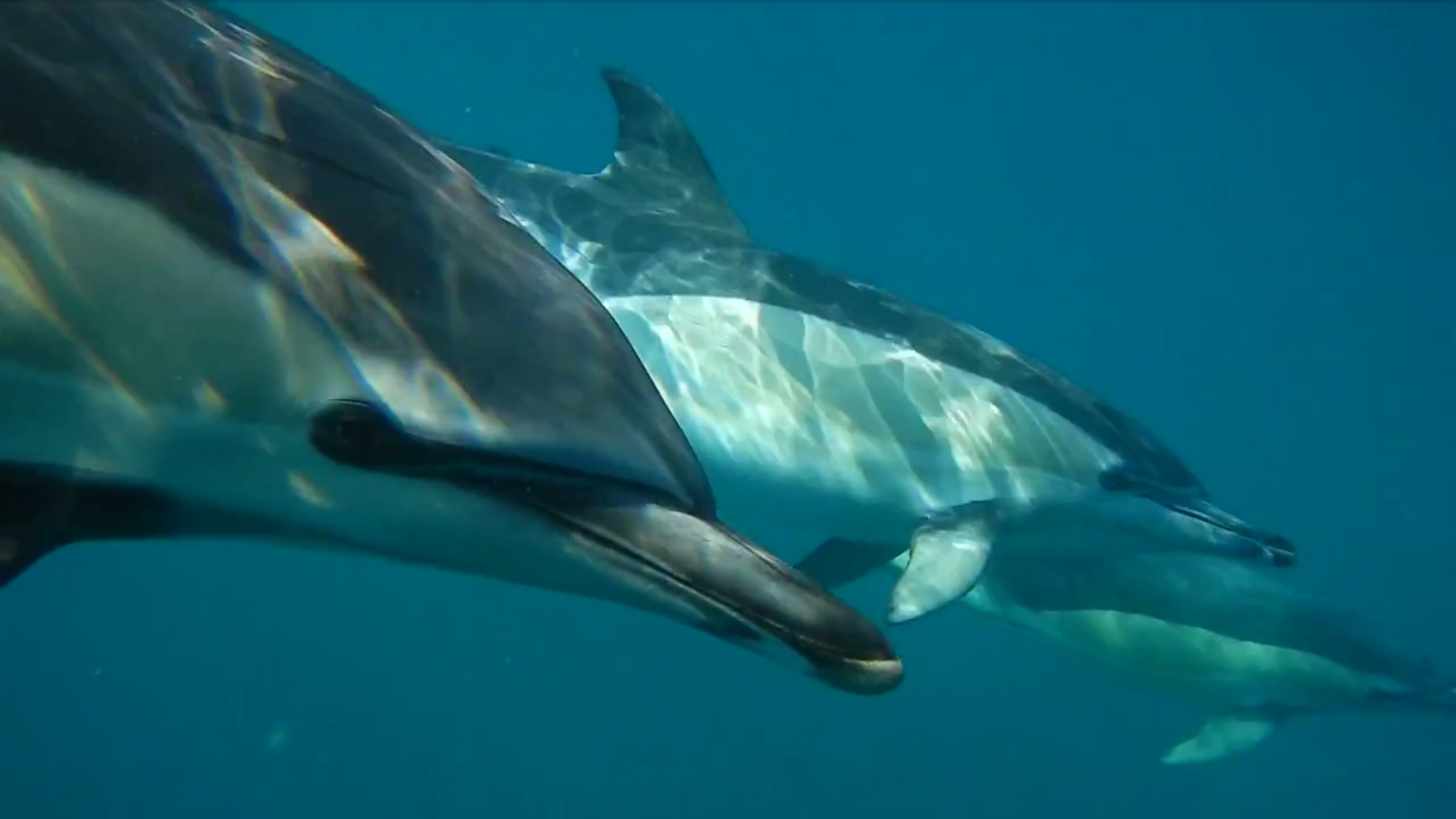
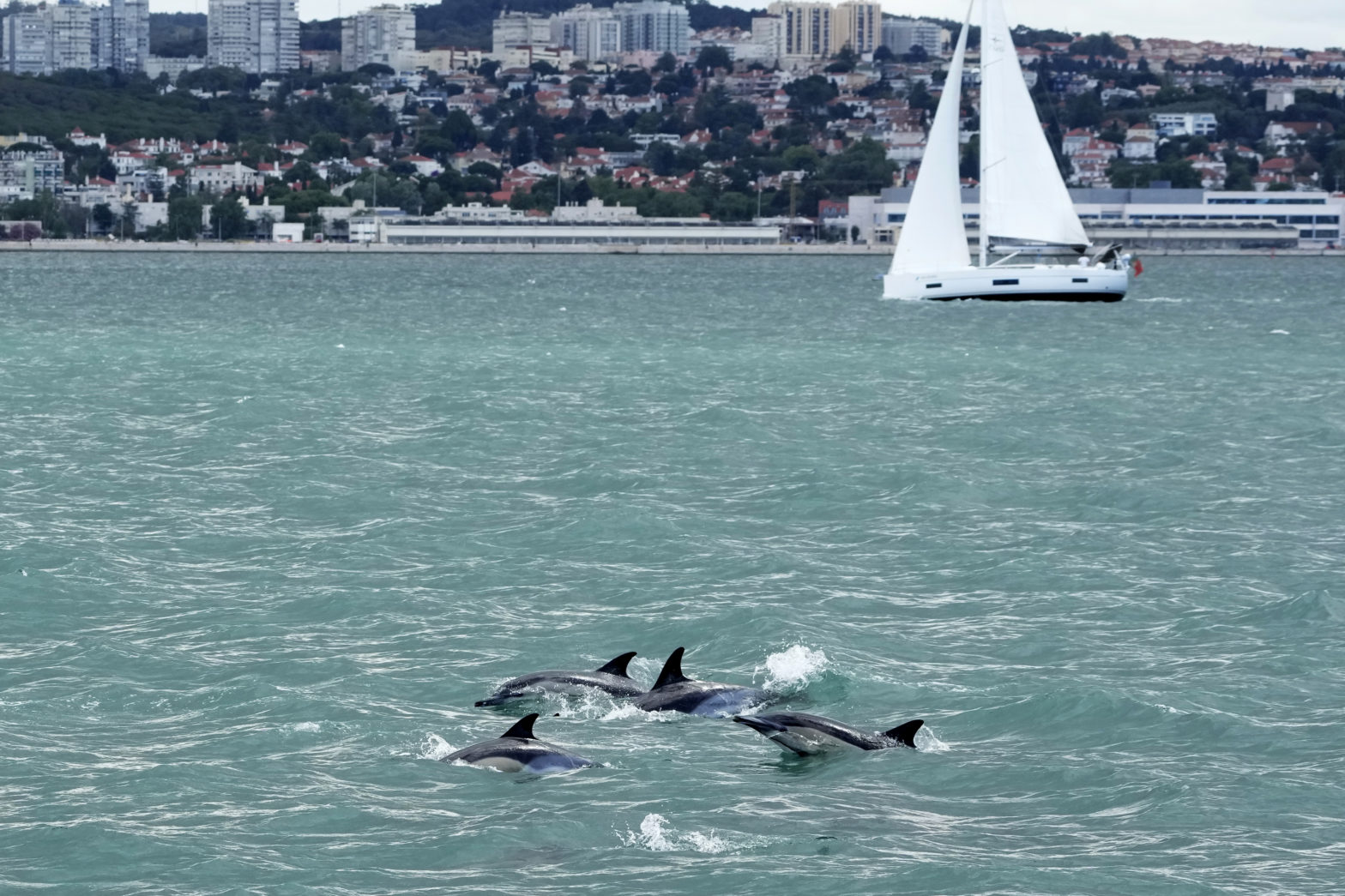
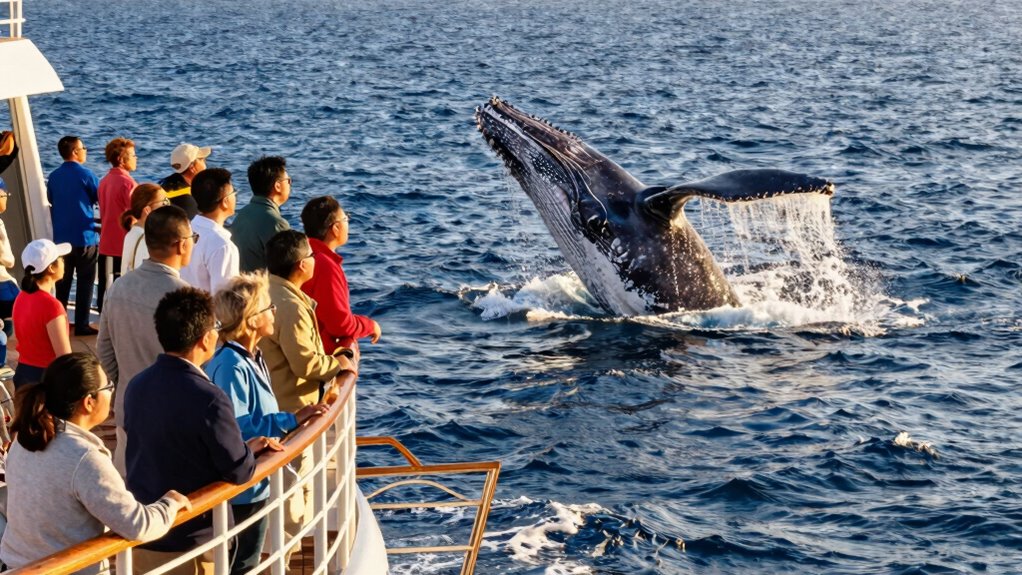
Thirty minutes offshore the captain cuts throttle and the biologist deploys a hydrophone, its cable unspooling into water now seven hundred metres deep. Through deck speakers you hear clicks—sperm whales echolocating along the continental slope. The boat turns southwest and accelerates, spray sheeting across the bow as you grip railings and scan the horizon. A dorsal fin breaks the surface two hundred metres ahead, then another, then six—common dolphins arcing in synchronised leaps, their bodies silver against the swell. The engine idles and the pod approaches, curious, weaving beneath the hull where you lean over and watch their shadows dissolve into indigo depths. Forty minutes pass before a larger blow erupts portside: a fin whale, eighteen metres long, its back rolling through the surface like a submerged ridge before the fluke lifts and descends without splash.
All the details about your upcoming adventure in one place
Lisbon whale watching excursions depart from Belém and venture into the Tagus estuary where Atlantic waters meet the river mouth. Marine biologists guide observation of bottlenose dolphins, common dolphins, and seasonal fin whales passing through Portugal's coastal migration corridor. These lisbon whale watching tours operate year-round with zodiac or catamaran vessels equipped for wildlife spotting.
Portugal's Atlantic coast supports seventeen cetacean species year-round, more than any comparable European shoreline between Galicia and Gibraltar.
The continental shelf drops sharply fifteen nautical miles west of Cascais, creating upwelling zones that concentrate plankton, squid, and the migratory corridors cetaceans follow between Arctic feeding grounds and subtropical calving waters. Lisbon whale watching tours depart from Doca de Santo Amaro, tracing the Tagus estuary mouth before entering open ocean where fin whales, minke whales, and common dolphins congregate during spring and autumn migrations.
Commercial whale watching in Portuguese waters began in 1998 after the Azores proved cetacean tourism viable. By 2006, Lisbon operators adopted rigid-hull inflatables capable of reaching the shelf edge within ninety minutes, collapsing what had been multi-day fishing expeditions into half-day excursions. Marine biologists now staff most vessels, identifying individuals by dorsal notches and fluke patterns catalogued in regional databases. Sightings peak between May and October when North Atlantic right whales and sperm whales pass the Estremadura coast, though resident bottlenose dolphins appear throughout the calendar.
The Tagus River plume creates a nutrient gradient extending forty kilometres into the Atlantic, visible from satellite as a sediment-rich tongue where salinity drops and phytoplankton blooms. Predatory fish follow this gradient seaward, drawing dolphins and pilot whales into predictable feeding zones that operators target with GPS waypoints refined over two decades. Spring departures coincide with sardine runs; autumn tours intercept southbound rorquals tracking mackerel schools toward Moroccan waters. Hydrophones monitor whale vocalisations below the thermocline, allowing captains to position vessels along probable surfacing points minutes before animals breach.
Lisbon Portugal whale watching operates under strict approach protocols: vessels maintain one hundred metres from large whales, fifty from dolphins, and cut engines when animals surface within proximity zones. The Portuguese Environment Agency enforces these distances through aerial patrols and coordinates sighting data with university cetacean research programs. Operators report species, pod size, and behaviour to a centralised registry that informs conservation policy across Portugal's exclusive economic zone, linking recreational tourism to long-term population monitoring that has tracked a twelve percent increase in common dolphin numbers since 2011.

Seventeen cetacean species inhabit Portugal's Atlantic waters, more than any comparable European coast between Galicia and Gibraltar.
Dress in layers and wear wind-resistant clothing as sea temperatures on a lisbon whale watching excursion can be significantly cooler than on land. Comfortable, non-slip footwear is essential for safety on the boat deck.
Due to the size of the rigid inflatable boats, avoid bringing large bags or bulky equipment. Secure all personal items as the boat may reach high speeds during the search for wildlife.
This is an ideal environment for wildlife photography, but please use a secure strap for your camera. Keep your gear protected from sea spray while on your lisbon whale watching tour.
Children are welcome on board, though the activity is best suited for those comfortable with high-speed boat travel. Always ensure children are wearing their life jackets properly during the lisbon whale watching trip.
The operator strives to be inclusive, but guests should be aware that boarding a RIB boat requires physical agility. Please contact the team in advance if you have specific accessibility requirements for your lisbon whale watching tickets.
No food or drink is served on board, but guests may bring small personal snacks and water. Keep consumption minimal to ensure no litter enters the Tagus River ecosystem.
Opening hours
09:00–18:00
Address
Doca de Santo Amaro, Av. Brasília, 1350-353, Lisbon, Portugal
Expert crew
Marine biologists and skippers on every tour
Best arrival window
09:00–14:00
Storage
Limited space on vessels, travel light
Official site
https://seaeo-tours.pt
Public transport · 15m · 2 EUR
Take the train to Alcântara-Mar station followed by a short walk to the marina.
Taxi · 10m · 10 EUR
Request a drop-off at Doca de Santo Amaro, Av. Brasília.
Full refunds are available for cancellations made within the operator's specified advance window. Please consult your booking confirmation for details regarding the 31 EUR per person entrance fee.
Recommended time
3-4 hours
Planning your lisbon whale watching excursion requires prioritizing the early arrival window to secure calm Atlantic waters and optimal marine visibility. Because lisbon whale watching tours typically span several hours, arriving by 09:00 ensures you have ample time to board at Doca de Santo Amaro and prepare for departure. Most guests find that booking lisbon whale watching tickets for the morning session minimizes wait times and avoids the higher crowd density seen during the afternoon marine expeditions.
Crowd levels through the day
Weather · crowds · average price — dots go green to amber to red as each metric rises.
Mild temperatures and frequent dolphin sightings in the estuary waters.
Secure your lisbon whale watching tickets early, especially during peak summer weekends.
Av. Brasília, 1350-353, Lisbon, Portugal
Look for the designated tour operator meeting area near the water.
Get directions
Embarking on a lisbon whale watching excursion provides children a rare opportunity to spot marine life in their natural habitat along the Tagus River. Understanding the maritime environment ensures a comfortable experience for the whole family as you observe these aquatic mammals.
Given the open-water nature of lisbon whale watching tours, administer any necessary motion sickness medication well before departure to ensure comfort. Keep children focused on the horizon rather than screens or books to maintain equilibrium during the voyage.;Age Considerations
The Doca de Santo Amaro marina offers a convenient selection of restaurants for those planning a lisbon whale watching excursion. You can enjoy a meal with waterfront views just steps from your vessel before starting your oceanic marine life expedition.
Located right at the departure point, this spot serves fresh seafood and local wine. It is ideal for a relaxed lunch before checking your lisbon whale watching tickets at the nearby office.
Real experiences from real travelers
We spotted a pod of bottlenose dolphins within twenty minutes of leaving the dock. The marine guide explained their behavior patterns in the estuary. Water was calm that morning and we could hear them surface.
The catamaran was comfortable and the crew knew exactly where to find cetaceans. We saw common dolphins and learned about migration routes through the Tagus. Worth booking the morning departure for better visibility.
Our lisbon whale watching tour exceeded expectations. The biologist onboard shared research data about seasonal patterns. We observed dolphins feeding near the 25 de Abril Bridge. Bring a zoom lens.
Saw several dolphins but no larger cetaceans. The guide mentioned that fin whales are rare in the estuary but occasionally pass through in spring. Smooth ride and clear explanations throughout.
The tour combined wildlife observation with views of Lisbon's waterfront. We watched dolphins interact with fishing boats near Belém. The crew respected distance guidelines to avoid disturbing the animals.
Third time doing lisbon whale watching tours and we always see marine life. This trip included bottlenose dolphins and harbor porpoises. The catamaran design gives everyone a clear view.
Early light on the Tagus was perfect for photography. Dolphins appeared near the river mouth where it meets the Atlantic. Guide pointed out seabirds that follow the pods. Calm conditions made it easy to spot surfacing.
Crew provided context about Tagus River ecology and how cetaceans use the estuary for feeding. We observed dolphins for nearly forty minutes. Ticket process was straightforward and departure was punctual.
Saw a small group of common dolphins but they moved quickly. The guide explained that behavior varies by tide and current. Nice way to see Lisbon from the water even if wildlife is unpredictable.
Everything you need to know for your journey
Yes, cancellations are handled according to the provider's policy; please review your confirmation for specific refund terms regarding the 31 EUR fee.
We recommend following the best arrival window of 09:00–14:00 to ensure a smooth start to your experience.
The estuary is an excellent location for wildlife, with many lisbon whale watching tours departing from the sheltered waters near the bridge.
Yes, the family-friendly nature of the tour makes it suitable for many ages, provided they are comfortable with a fast-moving vessel.
While dolphins are the most frequent sighting, the ecosystem supports various cetaceans, and whale sightings are a distinct possibility on a lisbon whale watching trip.
Wear warm, wind-resistant layers and non-slip shoes for your lisbon whale watching adventure.
Photography is highly encouraged, but please ensure your gear is securely strapped for your safety on the boat.
You can reach the Doca de Santo Amaro meeting point via train to Alcântara-Mar or by taxi to Av. Brasília.
No food or drink is served on board, but you may bring small personal items for your lisbon whale watching outing.
A massive suspension bridge connecting Lisbon to Almada across the Tagus River.
A themed hotel located within walking distance of the marina.
Join thousands of happy travelers who have discovered this incredible experience
Book Your Experience Now